From Fintech to EdTech with David Gonzalez
TechXY Turbo, Episode 9
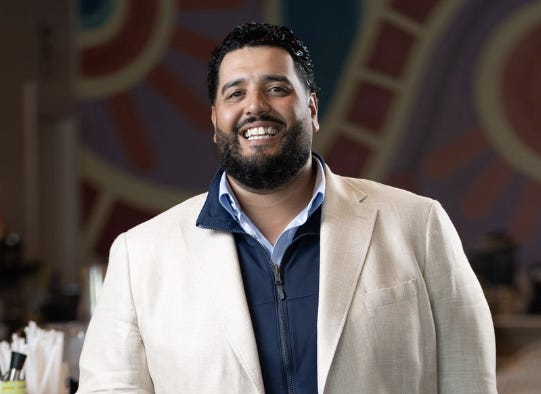
David Gonzalez is the Co-Founder and CEO of Arbol, a student financial success platform that helps colleges keep more students enrolled by tackling the real financial barriers that cause them to drop out. Arbol partners with colleges and universities to give students a clear, personalized picture of their financial situation and actionable steps they can take, while giving staff the data and tools they need to proactively remove financial roadblocks at scale.
Before launching Arbol, David led conversational banking initiatives at HSBC, where he helped design and deploy an AI-powered digital assistant that made it easier for customers to get financial guidance and complete everyday banking tasks online. His work shifted a significant share of volume from the call center to digital channels and earned him recognition as HSBC’s Digital Banking Employee of the Year. He later served as VP of Operations at Kangarootime, an early-stage SaaS company, where he helped scale the team from a small startup to a multi-continent operation and supported the company through key growth and funding milestones.
As a first-generation college graduate, David has seen firsthand how financial complexity and uncertainty can derail students’ education. His work at Arbol is driven by a simple belief: when students have clarity, support, and a sustainable financial plan, they are far more likely to stay enrolled, graduate, and build the futures they envision for themselves.
Listen to “From Fintech to EdTech” below, or on Apple Podcasts, Spotify, YouTube, Amazon, Pandora, or wherever you get your podcasts. The episode transcript is shared below the embed.
TechXY Turbo - Podcast Transcript - (E9)
Frank: Welcome to another episode of TechXY Turbo. My name is Frank Gullo and I am your host.
Today we’re joined by David Gonzalez, co-founder and CEO of Arbol, a student financial success platform that helps colleges keep more students enrolled by tackling the real financial barriers that cause them to drop out. Arbol partners with colleges and universities to give students a clear, personalized picture of their financial situation and actionable steps they can take while giving staff the data and tools they need to proactively remove financial roadblocks at scale.
As a first-generation college graduate, David has seen firsthand how financial complexity and uncertainty can derail students’ education. His work at Arbol is driven by a simple belief: when students have clarity, support, and a sustainable financial plan, they’re far more likely to stay enrolled, graduate, and build the futures they envision for themselves.
David, it is so great to have you on the podcast. We’ve been talking about this for a few weeks. Thank you for being here. How are you doing today?
David: I’m doing great, Frank. Thanks for having me.
Frank: Great and as this is a tech podcast, let’s start with your tech story. You’ve built a career at really the intersection of finance and technology from implementing conversational AI bots at HSBC to innovation leadership at M&T, and now founding an EdTech company. How has your relationship with technology evolved across these very different sectors so far?
David: Yeah, great question, Frank. For me, when I first started at HSBC, I was a product manager. I was leading engineering and design teams to build the technology that we were aiming to get adopted, both with the customers and internal teams.
What I learned right away was building the technology is the easy part. Getting folks to adopt it is the hard part. And that’s how my relationship has evolved and has really been consistent across the sectors. At HSBC, it took time and effort to get folks across different teams to align, buy in, and understand how to use the technology and get a clear understanding of the impacts it would have on people’s workflows and lives.
It’s the same thing in higher ed, and I’m grateful to have that experience with learning how to get all the different stakeholders on one page and getting them working towards adopting the technology to hit their goals. That’s how my relationship has changed, it’s been less about how are we going to solve the technical problems and more about how do we get the people—the people that would get the most benefit—using it and adopting it accordingly.
Frank: You use the adoption word and obviously you’re successful because all I hear about is chatbots. And you were doing this before it was cool.
Let’s dig into that a little more. At HSBC, you led digital product initiatives that delivered millions in cost savings by migrating customer interactions and implementing automated AI chatbot solutions. What did you learn in addition to adoption about using technology to solve really complicated customer problems?
David: It starts with understanding the end user and the challenges that they’re experiencing. The way that we rolled out what we call conversational banking, which included messaging and chat and eventually chatbots, was spending time at the contact center picking up calls, shadowing the folks in the front lines so that I was able to get a better understanding of the type of work that they were dealing with, the type of interactions.
That helped me develop empathy and understanding towards the pressure that they’re under to support, the millions of contacts, and the need to do it efficiently while keeping the people with issues happy. That was one aspect that I had to understand.
The other aspect was understanding the evolving preferences at the time. This was back in 2015 and folks were starting to use messaging channels to interact with customer service and merging that together to understand what the end-to-end experience looks like. For me it was very much understanding how things work. What can we do with the technology? Then start to roadmap out in phases to how we will implement it. That’s kind of the approach that I took and it was definitely a learning curve.
Frank: I can see how that has led to your path and now want to get into your company a little bit. Arbol, as I understand, addresses student retention through financial clarity. Speaking as a parent and now with a child in college, I’m really looking for your clarity here ‘cause it’s a really complicated path with FAFSA and all this selection. From my own experience, I know there are financial literacy programs and portals out there. So what is fundamentally different about the technology approach Arbol is taking and what makes it more effective than the solutions that had been on the market?
David: Let’s start with why the solutions on the market are ineffective. You mentioned financial literacy. Financial literacy puts the onus on the student and family to do a lot of research to understand how to solve their problem. For most, that is figuring out how they’re going to fund college, not just one term, but all the way until they graduate.
Right now the average student is juggling up to 15 different funding sources to pay for costs that are getting higher and higher every single year, and there’s a lot of complexity to piece that together. The other tooling is the student portals. And when you’re stacking 5, 10, 15 different funding sources, all of them have different portals you have to access to apply, secure, and keep your funding.
What we do is we bring all of that data that exists in these disparate systems into one place, and make sure we have a robust, holistic financial profile of the students. Then we take all of the intelligence that financial literacy makes you go fetch and we leverage AI to generate the next steps that students can take so that they can close their net cost and also keep their funding all the way until they graduate.
Frank: That makes a lot of sense. Thank you. On the tech side, a lot of educational institutions have older technologies. They have legacy systems. When you were looking to do this and partner with them, how did you design, develop Arbol technology to make implementation work and go fast and easy with these colleges?
David: It’s crawl, walk, run. When we first started with our first five institutions, we didn’t have any data integrations. What we did was we started with a small population of students, 50 to 100, and we collected the data manually and put it into the system, trained our AI to be able to respond to it.
That was great because this gave us a bunch of hands-on learning on the nature of the data, the frequency to which it changes and where it all was stored. As a phase two, we then created a document capture so that we were able to extract the data from the documents that existed.
Then in phase three, once we had a handle on what data, where it exists in the different systems, we then built out two versions: a secure FTP to automate the data going to and from the college systems, and then direct integrations for the rest.
We thought about it as very much let’s start with the small dataset, small population of students, test out, experiment, make sure we understand what works. Once we got things working, then we started to add the automations from a technology perspective.
Frank: Great, thank you for spelling that out. Speaking on the student side, and this is I think very important to parents, one of your features is detecting students who are in financial crisis early. On this point, what technology, what data signals do you use to help identify these at-risk students before they really hit the breaking point, or are really too far gone? And how does your AI component that you’re developing work and what are you planning with that?
David: Start with the basics. College funding, purchasing a college education is, from my understanding, one of the only things you can purchase without having full financing figured out. So every year you’ve got incoming freshmen who are starting to use the service. They’re maybe three, four weeks into classes, still haven’t figured out how they’re going to pay the bill. It’s kind of crazy.
What we do instead is we start there to get an understanding of the student’s college bill, their funding, and detect if there’s any sort of gap. If there’s a gap, that’s the first risk indicator. The next piece that we start to bring in is data on what’s available for students. Let’s say they are eligible to borrow more, or we can validate that a student has family support that’s coming in, that will lower their risk score.
As we identify that a student really doesn’t have any viable paths to be able to pay, that will increase the risk rating. That’s one aspect. The other aspect is monitoring students’ engagement with their finances. Did they waive their health insurance or make a decision? Did they get through completing FAFSA, state aid, any sort of the applications they need to get through?
We combine that and those factors all demonstrate whether a student is at risk or is stable. Then based on where they’re at, we’re able to flag not only the risk level of the student, but the next suggested set of actions they should take, for both the student and staff member at the institution to follow.
Frank: That sounds extremely valuable and I can see that growing over time because even I’ve noticed it’s different right before you’re in college and then first year, second year, and then, more different paths. Beyond that, Arbol is browser-based and mobile responsive. That seems intentional, and I’m wondering what design development decisions did you make to balance the backend sophistication that you have connecting to all these older legacy systems, but yet simplicity on the front end, particularly for a student population that is much more used to their phone than laptops.
David: I’m actually going to start with the backend. The backend is really connecting all the plumbing and all of the different data sources that students need to aggregate so they get a full financial picture. This unification layer in the backend brings in billing data, financial aid data, credits, housing, anything that informs the student’s financial situation into one place. They were having to log into 5, 6, 7 different platforms, and we wanted to simplify that for them first and foremost.
Second, the front end is meeting students where they are, particularly with how they interact with their institution and nine times out of ten it’s going to be on the laptop. So we built for web first, mobile second. We do understand that students have a preference for mobile, but it’s not necessarily their primary interaction with their institution. The other piece from our front, I really want you to get this analogy of Arbol really being a central highway for students to navigate and manage their finances because we’re able to pipe all that data into one place and express to students where they stand today and the next steps and actions they need to take so that they’re able to maintain their funding as their expenses change.
We have them log into one place. Ahead of each semester, they’re able to look, “Hey, do I have to complete the FAFSA?” That could surface to them, sends them exactly to where they need to go to complete that action. “Hey, you took an extra class. We need to apply for more funding.” Takes you right to financial aid. “Hey, mom and dad are covering a portion of this.” It sends you a link so you can collaborate with your mom and dad. It simplifies where you need to go, and particularly how you’re interacting with the institution. That’s kind of how it all comes together.
Frank: Great. I mean, I’ll tell you, for the FAFSA clarity alone, it would be worth it. To me, the FAFSA is like the NFL season. It ends, but it doesn’t end.
I want to talk about our community, We’re both in Buffalo, NY, and speaking of institutions, you worked with both Canisius and Buff State, also schools that you attended. These universities started with pilots and then scaled to campus-wide deployments.
How does it feel to you personally to be able to not only develop solutions, but solutions at colleges you attended? Also, what technology capabilities or features proved the most critical in moving from smaller student pilots to real enterprise deployment? And these are pretty big institutions.
David: Foremost, it’s an honor to be able to give back to the institutions that gave me so much. At Buffalo State, I was able to be a member of the football team.
I had my first scare there when I thought I was going to have to drop out because I had a shortfall on my first semester that led to a hold on my account that I had to get solved. And as I interacted with my college teammates and classmates, I came to learn that the barriers from a financial perspective were the top reasons why folks were leaving. It really didn’t hit me though until I graduated and started to understand and comprehend it a little bit better.
As a small aside, one of my college roommates actually had a financial emergency, had to go back home, take care of mom. Never made it back because couldn’t afford to come back. Simply just couldn’t afford the plane ticket back. That stuck with me and it’s an honor to be able to solve some of those problems that were getting in the way of folks kind of recognizing their potential. I don’t believe that finances should get in the way.
Same thing at Canisius. That’s my first and foremost, honor. Second on what it takes to actually go from small to big: it really starts with defining and really building a coalition around a subset of students that most need to get the support and also the teams that are struggling the most to support their students.
Let me talk about Canisius for a second. Canisius is going through a pretty cool transformation where they are serving a lot more first-generation students, students of color, students that have higher needs than before. Typically they had been serving more of a traditional white male student population. And with that student shift came more needs and financial needs in particular.
What we did is that we actually started with that population that was growing and demonstrated success. What that did was build momentum both with the students and the staff that were supporting it so that we could get a broader coalition of support, and then we could work out what worked and what didn’t before we brought it into different teams on campus and also different student populations. Starting small allowed us to really work out the kinks, demonstrate success, build momentum, and then have a plan to scale to more students moving forward.
Frank: That makes a lot of sense. And I can see a lot of growth. As I was reading about the platform, I could see other things students need. There’s housing or sometimes there’s sororities or fraternities or they want to do a semester abroad. I don’t know your thoughts on those areas, but it is a big space. Students need a lot of things. Often, I’m not sure they know how to pay for them, as I’ve noticed.
Your platform also handles sensitive student financial data and needs to comply with many standards. For example, SOC 2, FERPA and other standards as well. How did you architect the software to not only do everything else we’ve talked about, but to also meet very stringent enterprise security requirements without slowing down your innovation and growth?
David: There’s a two-pronged approach to that. When we hired our engineering team, it was a must that we hired folks who have built higher ed tech before, understand the rules and regulations, and understand how to build enterprise software. So the moment that we started to build software we already had as part of our requirements, making sure that we’re compliant, the security standards that we need to meet and making sure that we’re following FERPA, and that was really important to us.
Second is that does mean that you’re spending more time doing that, but in higher ed tech, without spending that time, you’re really not able to innovate because you won’t get access to that data. So it’s a must, and it’s ensuring that you’re incorporating it into your plan, understanding and prioritizing exactly which data points are most useful and which you need. And tackling it from day one rather than letting it become a big issue and then remediating things, or working backwards. It is simply one of those industries where you have to bake it into your plan from day one, especially for the type of work that we were doing.
Frank: It makes sense. I mean, the amount of trust people must need to have—you need to have that. Looking ahead, other emerging tech, whether that’s more sophisticated AI, which we hear about a lot, predictive analytics or new integrations, what’s on the roadmap that has you excited? What are you thinking of next? Where do you see ed tech platforms like this going and what are you personally wanting to do next?
David: I’d say the paradigm is shifting and it’s shifting from software that automates processes or just from automating processes to automating labor. What I mean by that is we’re now getting to the point where we’re starting to build task automation so that students and families have to spend less time actually doing things like filling out the FAFSA, having to spend less time actually going and signing up for a payment plan or making certain decisions. That’s what we’re really excited about — the task and workflow automation that we’re starting to get into. And that works both in the students and the staff set.
Frank: Excellent. And speaking of AI, I asked an AI assistant to analyze your background and generate a closing question. Let’s see what it came up with.
“David, you’ve successfully built technology solutions in both heavily regulated financial services and now higher education. Both industries are known for being slow to adopt new technology. What have you learned about introducing innovative platforms at traditional risk-averse institutions, and what advice would you give to other tech entrepreneurs trying to do the same?”
David: It really starts with finding the champion and the other side of the table. The person that gets it, that understands it, that is going to whip the coalition together. It is very much a big part of the work.
My advice to any technologist out there would be the people map, the stakeholder map—that part of the problem needs to be solved too. Understand the key players that you need to have involved so that you can innovate and build and adopt technologies.
If you do not take the time to influence and build that coalition at the institutions that you’re partnering with, whether that’s in financial services or higher ed tech or gov tech, you’re just not going to be successful. Embrace it and understand that this is part of the problem to solve.
Frank: Great advice. David, in closing, and to anyone listening, if they want to contact you, if they have a question about Arbol or the ed tech industry, how can they find you? Where are you online?
David: First off, you can learn more about Arbol by going to www.growarbol.com, and you can contact me at david@growarbol.com. That’s where I’m most responsive.
Frank: David, thank you very much for sharing your insight. I learned a lot, not only about technology, but also as a parent about education. You’ve given me a lot to think about. Thanks for coming on. Appreciate your time.
David: Thanks, Frank.